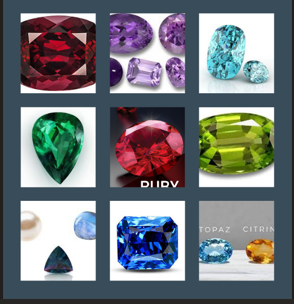
Every month of the year is linked to a unique gemstone, each carrying centuries of history, symbolism, and beauty. Birthstones have been treasured across cultures — from ancient Egypt and Rome to medieval Europe and beyond — as symbols of protection, love, wisdom, and vitality. Whether you're searching for the perfect birthday gift, exploring the spiritual meaning of a gemstone, or simply curious about the stone that represents your birth month, this complete birthstone guide covers everything you need to know.
In the following sections, you'll find detailed profiles for all 12 months, including the gemstone's physical properties, historical significance, symbolic meaning, color variations, and care tips. Let's explore the stunning world of birthstones, one month at a time.
January to June — The First Half of the Year's Birthstones January Birthstone — Garnet
Garnet is January's birthstone, most recognized for its deep red color, though it actually occurs in a wide spectrum including green (tsavorite), orange (spessartine), and purple (pyrope). On the Mohs hardness scale, garnet ranges from 6.5 to 7.5, making it durable enough for everyday jewelry. It crystallizes in the isometric system, with three equal-length axes perpendicular to each other.
Symbolism: Garnet is associated with love and passion, making it a popular choice for romantic gifts. It is also believed to offer strength and protection against negative energy, and to revitalize vitality, enhance creativity, and restore emotional balance.
Color Variations:
Almandine — Deep red; the most common variety, associated with protection
Pyrope — Bright red; prized for its vivid brilliance
Spessartine — Orange to red; linked to creativity and emotional balance
Tsavorite — Vibrant green; rare, emerald-like, and highly valuable
Grossular — Varies from green to yellow
Care Tips: Clean with warm, soapy water. Avoid harsh chemicals and store separately from other gemstones to prevent scratching.
---
February Birthstone — Amethyst
Amethyst is a striking purple variety of quartz and the official birthstone for February. Ranging from pale lavender to deep violet, it has captivated people for thousands of years. The ancient Greeks believed wearing amethyst prevented intoxication and promoted clarity of mind, while Romans used it as a protective talisman. Throughout history, it has adorned the crowns of kings and queens, symbolizing power and stability.
Physical Properties: Amethyst is composed of silicon dioxide (SiO₂) with iron traces that produce its purple hue. It scores 7 on the Mohs scale, making it suitable for daily wear, with a specific gravity of approximately 2.65.
Symbolism: Amethyst is regarded as a stone of spiritual growth, believed to enhance intuition, promote calmness, and foster emotional balance. It is also considered protective against negative energies and psychic stress, and symbolizes unconditional love and harmony in relationships.
Color Variations:
Light Lavender — Pale, soft purple; common in less valuable specimens
Medium Purple — Balanced shade; widely used in jewelry
Deep Purple — The most sought-after hue; rich and vibrant
Amethyst Geode — Contains multiple shades in one piece
Rose De France — Light pinkish-purple; subtle and delicate
Care Tips: Clean with warm soapy water and a soft cloth. Avoid ultrasonic cleaners, direct sunlight, and prolonged heat, as these can fade or alter the stone's color. Store in a soft pouch away from other gems.
---
March Birthstone — Aquamarine
Aquamarine, whose name derives from the Latin aqua marina meaning "water of the sea," is March's birthstone. A member of the beryl family, it ranges from pale blue to deep blue-green and scores 7.5–8 on the Mohs scale — excellent for everyday wear. Ancient Romans and Greeks believed aquamarine protected sailors and calmed stormy seas. Medieval healers used it to treat throat and digestive ailments. Notably, the Dom Pedro Aquamarine (10,363 carats) — the largest cut specimen in existence — is on display at the Smithsonian.
Symbolism: Aquamarine represents hope, youth, and new beginnings. It is believed to soothe anxiety, enhance mental clarity, and encourage honest communication through the throat chakra. It is also recognized as a 19th-anniversary gemstone, symbolizing enduring love.
Color Variations:
Pale Sky Blue — Very light; common and affordable
Medium Sea Blue — Classic aqua tone; moderately valued
Santa Maria Blue — Vivid blue; rare and highly prized
Care Tips: Clean with mild soap and lukewarm water using a soft brush. Avoid bleach, acids, and prolonged sunlight, which can fade the color over time. Store in a soft pouch away from harder gems like diamonds.
---
April Birthstone — Diamond
Diamond, April's birthstone, is the hardest natural substance on Earth and one of the most universally coveted gemstones. Its use dates back to 4th century BC India, where diamonds were valued as talismans and cutting tools. Ancient Romans believed they were splinters of fallen stars or tears of the gods, while medieval warriors wore them as protective amulets. Diamonds became symbols of royal power through crown jewels such as the legendary Koh-i-Noor.
Physical Properties:
Chemical Formula: Pure carbon (C)
Crystal System: Cubic (Isometric)
Hardness: 10 (Mohs) — the hardest known mineral
Refractive Index: 2.42 (extreme brilliance)
Luster: Adamantine (unmatched sparkle)
Density: 3.52 g/cm³
Cleavage: Perfect in 4 directions
Symbolism: Diamonds represent eternal love and commitment (hence their use in engagement rings), strength and invincibility (from the Greek adamas, meaning "unbreakable"), and clarity, purity, and spiritual enlightenment.
Color Variations & Grading:
Colorless (D–F) — Most valuable; extremely rare
Near Colorless (G–J) — Slight warmth; excellent everyday value
Faint Yellow (K–M) — Noticeable tint; more budget-friendly
Fancy Colors (Blue, Pink, Yellow, Red) — Rare and expensive natural varieties
Black Diamond — Opaque and increasingly trendy in modern jewelry
Care Tips: Clean with warm soapy water and a soft brush, or use ultrasonic cleaners (safe for most diamonds). Avoid chlorine and hard impacts, which can chip the stone despite its hardness. Store separately from other gems.
---
May Birthstone — Emerald
Known as the "King of Green Gemstones," emerald is May's birthstone and one of the most historically significant gems in the world. Cleopatra's favorite stone, emeralds were mined in Egypt as far back as 3000 BCE and believed to represent fertility and immortality. Roman scholar Pliny the Elder praised their soothing green color, associating them with Venus. Mughal emperors had emeralds engraved with sacred texts and wore them as protective talismans.
Physical Properties:
Mineral Family: Beryl (colored by chromium/vanadium)
Color: Vibrant green, from light to deep forest green
Hardness: 7.5–8 on the Mohs scale (durable but brittle due to natural inclusions)
Clarity: Almost always included — internal flaws are called "jardin" (French for "garden")
Luster: Vitreous (glassy shine)
Refractive Index: 1.577–1.583
Symbolism: Emerald represents rebirth, spring, and growth as the May birthstone. It is also believed to strengthen love and loyalty in relationships, enhance wisdom and mental clarity, and traditionally was thought to soothe eyesight and reduce stress.
Color Variations & Grading:
Top Quality — Vivid, slightly bluish-green (Colombian emeralds are the gold standard)
Secondary Hues — Yellowish or grayish-green, which lowers value
Too Light — May be classified as "green beryl" rather than emerald
Eye-clean emeralds are extremely rare; minor inclusions are acceptable if they don't compromise durability
Care Tips: Use warm water, mild soap, and a soft brush. Avoid ultrasonic and steam cleaners. Keep away from harsh chemicals, extreme heat, and rough wear. Wrap in a soft cloth when storing.
---
June Birthstones — Pearl & Alexandrite
June is one of three months with two birthstones, offering wearers a choice between pearl and the extraordinary alexandrite.
Pearl is unique among gemstones in that it is organic — formed within mollusks such as oysters. Prized for thousands of years in ancient China, Rome, and Egypt, pearls are associated with purity and wealth. They come in white, cream, pink, black, golden, and lavender hues and score just 2.5–4.5 on the Mohs scale, making them among the softest wearable gems. Pearl symbolizes purity, innocence, wisdom, and loyalty, and is believed to promote calmness and emotional balance. Clean gently with a soft damp cloth, and keep away from perfumes, harsh chemicals, and sweat.
Alexandrite is one of the rarest and most remarkable gemstones in existence — more valuable than diamonds in top quality. Discovered in 1830s Russia and named after Tsar Alexander II, it is famous for its dramatic color-changing ability: emerald green in daylight and ruby red under incandescent light. A variety of chrysoberyl (the chromium causes the color shift), alexandrite scores 8.5 on the Mohs scale. It symbolizes good fortune, creativity, and balance, and is believed to enhance intuition and joy. Clean with warm soapy water and store away from harder gems.
July to September — Summer and Autumn's Most Iconic Gemstones July Birthstone — Ruby
Ruby is one of the most prized and historically significant gemstones ever known. The birthstone for July, it belongs to the corundum family — the same mineral as sapphire — and owes its vivid red color to chromium. Ruby ranks 9 on the Mohs scale, second only to diamond in hardness, making it an exceptionally durable choice for fine jewelry.
Ancient Hindu civilizations considered rubies the "king of gems," offering protection in battle. Warriors in Burma (modern Myanmar) reportedly embedded rubies in their skin believing it made them invincible. Medieval Europeans associated the stone with health, wealth, and love.
Physical Properties:
Chemical Composition: Al₂O₃ (Aluminum Oxide + Chromium)
Hardness: 9 (Mohs) — extremely durable
Luster: Vitreous (glass-like)
Crystal System: Hexagonal
Transparency: Transparent to opaque
Symbolism: Ruby is called the "stone of love" for its association with passion and romance. It has historically been worn by royalty for courage and power, and in many cultures is believed to attract wealth and good fortune. It is also said to stimulate the heart chakra, boosting motivation and zest for life.
Color Variations:
Pigeon's Blood — Vivid red with a slight blue undertone; the most valuable ruby
Pinkish-Ruby — Lighter, approaching pink sapphire
Orange-Red (Sunrise Ruby) — Fiery and vibrant
Purplish-Red — Deeper, richer tones
Star Ruby — Displays a six-rayed star (asterism) when cut as a cabochon
Care Tips: Wash with warm soapy water and a soft brush. Ultrasonic cleaners are generally safe unless the stone has fractures. Avoid extreme heat and prolonged sunlight, which can affect color in treated stones.
---
August Birthstone — Peridot
Peridot, August's vivid olive-green birthstone, has been treasured since at least 1500 BCE, when Egyptians mined it on Zabargad Island (St. John's Island) in the Red Sea. Egyptians called it the "gem of the sun" and associated it with Horus, the sky god. It was also used to adorn medieval churches and religious relics. Ancient cultures broadly believed peridot warded off evil spirits.
Physical Properties:
Chemical Formula: (Mg, Fe)₂SiO₄ (Magnesium Iron Silicate)
Hardness: 6.5–7 on the Mohs scale (moderate durability)
Crystal System: Orthorhombic
Refractive Index: 1.65–1.69 (good brilliance)
Luster: Vitreous (glassy)
Cleavage: Poor (somewhat resistant to breakage)
Symbolism: Peridot symbolizes protection and prosperity. Ancient cultures believed it warded off evil spirits and nightmares, and it continues to be associated with positive energy, renewal, and good fortune.
Color Variations:
Lime Green — Most common
Yellow-Green — Lighter tones
Olive Green — Classic, deeper shade
Brownish-Green — Lower quality
Vivi Peridot — Rare emerald-like green; highly prized
Care Tips: Use warm soapy water and a soft brush. Avoid ultrasonic cleaners, steam, and prolonged sunlight or extreme heat, which can cause fading. Store separately from harder gems to prevent scratching.
---
September Birthstone — Sapphire
Sapphire is September's gemstone and one of the most enduring symbols of wisdom, loyalty, and nobility in human history. While famous for its deep blue color — particularly the Kashmir blue sapphire — it actually occurs in almost every color of the rainbow. The name comes from the Greek sappheiros, and ancient Persians believed the sky derived its blue color from sapphire's reflection. Medieval clergy wore blue sapphires to represent heaven and divine favor. In modern times, sapphire remains a beloved choice for engagement rings, most famously Princess Diana's iconic sapphire ring, now worn by Princess Catherine.
Physical Properties:
Mineral Family: Corundum (Al₂O₃) — same as ruby (red corundum = ruby; all other colors = sapphire)
Hardness: 9 on the Mohs scale — extremely durable, second only to diamond
Luster: Vitreous (glass-like)
Refractive Index: 1.76–1.77 (high brilliance when well cut)
Transparency: Transparent to opaque
Color Variations & Causes:
Blue Sapphire — Trace amounts of iron and titanium
Pink/Red/Purple — Chromium impurities (higher chromium = ruby)
Yellow/Green — Iron impurities
Padparadscha — Rare pink-orange blend of chromium and iron
Color-Change Sapphire — Shifts color under different lighting (e.g., blue to purple)
Care Tips: Clean with warm soapy water and a soft brush. Ultrasonic cleaners are generally safe unless the stone has fractures. Store separately from other gems, as sapphire — though very hard — can scratch softer stones. Excellent for daily wear but avoid extreme impacts.
October to December — The Year's Final Birthstones October Birthstones — Opal & Tourmaline
October offers two distinctive birthstone options, each with its own personality and appeal.
Opal is perhaps the most visually dramatic of all gemstones, celebrated for its mesmerizing play-of-color — a rainbow-like iridescence that shifts with the light. A hydrated silica gemstone (SiO₂·nH₂O), it scores 5.5–6.5 on the Mohs scale and ranges from transparent to opaque. Ancient Romans considered it a symbol of hope and purity; Arabs believed it fell directly from the heavens. In modern usage, opal represents creativity, inspiration, and emotional healing. Key varieties include:
White Opal — Milky background with play-of-color
Black Opal — Dark body with vibrant color flashes; the most valuable type
Fire Opal — Transparent orange-red, with or without play-of-color
Boulder Opal — Formed with ironstone host rock, showing natural matrix patterns
Opal care requires special attention: avoid prolonged water exposure (which can cause cracking), protect from heat and chemicals, and clean gently with a soft cloth and mild soapy water, drying immediately.
Tourmaline is an exceptionally versatile gemstone available in virtually every color imaginable. With a hardness of 7–7.5, it is durable enough for daily jewelry wear. Egyptian legend held that tourmaline traveled through a rainbow on its journey to the Earth, picking up its many colors along the way. Dutch traders introduced it to Europe in the 18th century. Tourmaline is believed to protect against negative energy and enhance spiritual growth. Its extraordinary color range makes it one of the most creatively used gems in contemporary jewelry design.
---
November Birthstones — Citrine & Topaz
November's two birthstones share warm, golden tones that evoke the season's colors.
Citrine takes its name from the French word citron (lemon) and is known for its cheerful yellow-to-orange hues. Often called the "Merchant's Stone," it was historically believed to attract wealth and abundance. Romans and Greeks used citrine in jewelry and talismans, though true natural citrine is rare — most commercial citrine is heat-treated amethyst or smoky quartz. Citrine is a member of the quartz family (SiO₂), scoring 7 on the Mohs scale. It symbolizes joy, prosperity, and positivity. Color varieties include lemon yellow, golden yellow, deep orange-red (Madeira citrine), and smoky brownish-yellow.
Topaz is the more durable of the two, scoring 8 on the Mohs scale. The name may derive from the Sanskrit tapas (fire) or from the Greek island Topazios. Ancient Egyptians associated it with the sun god Ra, and medieval Europeans believed it could break curses. Imperial topaz — in prized orange-pink hues — was coveted by Russian royalty. Topaz represents strength, wisdom, and protection. It comes in a remarkable range of colors:
Imperial Topaz — Valuable pink-orange-red hues
Blue Topaz — Sky blue to Swiss blue (often irradiated)
White/Silver Topaz — Colorless; resembles diamonds
Mystic Topaz — Rainbow-coated through treatment
For both stones, clean with warm soapy water and store separately. Note that prolonged sunlight can fade color in certain topaz varieties.
---
December Birthstones — Turquoise, Tanzanite & Blue Zircon
December is unique in having three recognized birthstones, all sharing a beautiful blue-to-blue-green palette.
Turquoise is one of the oldest gemstones in recorded history, treasured by ancient Egyptians, Persians, and Native Americans alike. Its name comes from the French pierre turquoise (Turkish stone), as it was first brought to Europe via Turkey. Ancient Egyptians used turquoise in iconic pieces including King Tutankhamun's burial mask. Navajo and Apache tribes believed it brought protection, good fortune, and healing. Turquoise scores 5–6 on the Mohs scale and comes in sky blue, robin's egg blue, greenish-blue, and apple green, often featuring characteristic brown, black, or golden veins from the host rock. Care requires avoiding chemicals, perfumes, and oils; clean only with a soft damp cloth.
Tanzanite is one of the rarest gemstones on Earth, found only in a small region near Mount Kilimanjaro in Tanzania. Discovered in 1967 and named by Tiffany & Co., it displays a captivating blue-to-violet color and a remarkable phenomenon called pleochroism — showing different colors when viewed from different angles. It scores 6.5–7 on the Mohs scale. Tanzanite is believed to enhance intuition and spiritual awareness. Top-grade (AAA) stones display deep blue to violet shades, while lower grades show paler or grayer tones.
Blue Zircon is often overlooked but is genuinely remarkable — it is one of the oldest minerals on Earth, dating back over 4.4 billion years. Its high refractive index gives it a diamond-like sparkle and fire (light dispersion) that rivals far pricier stones. Most blue zircon is heat-treated from brown zircon to achieve its vivid blue color. It scores 6.5–7.5 on the Mohs scale and has been used in Victorian-era jewelry. It is believed to promote wisdom, prosperity, and restful sleep. Because zircon can be brittle, store it carefully, avoid prolonged sunlight, and clean with warm soapy water and a soft brush.
Interested in our gemstones?
View Our Collection →