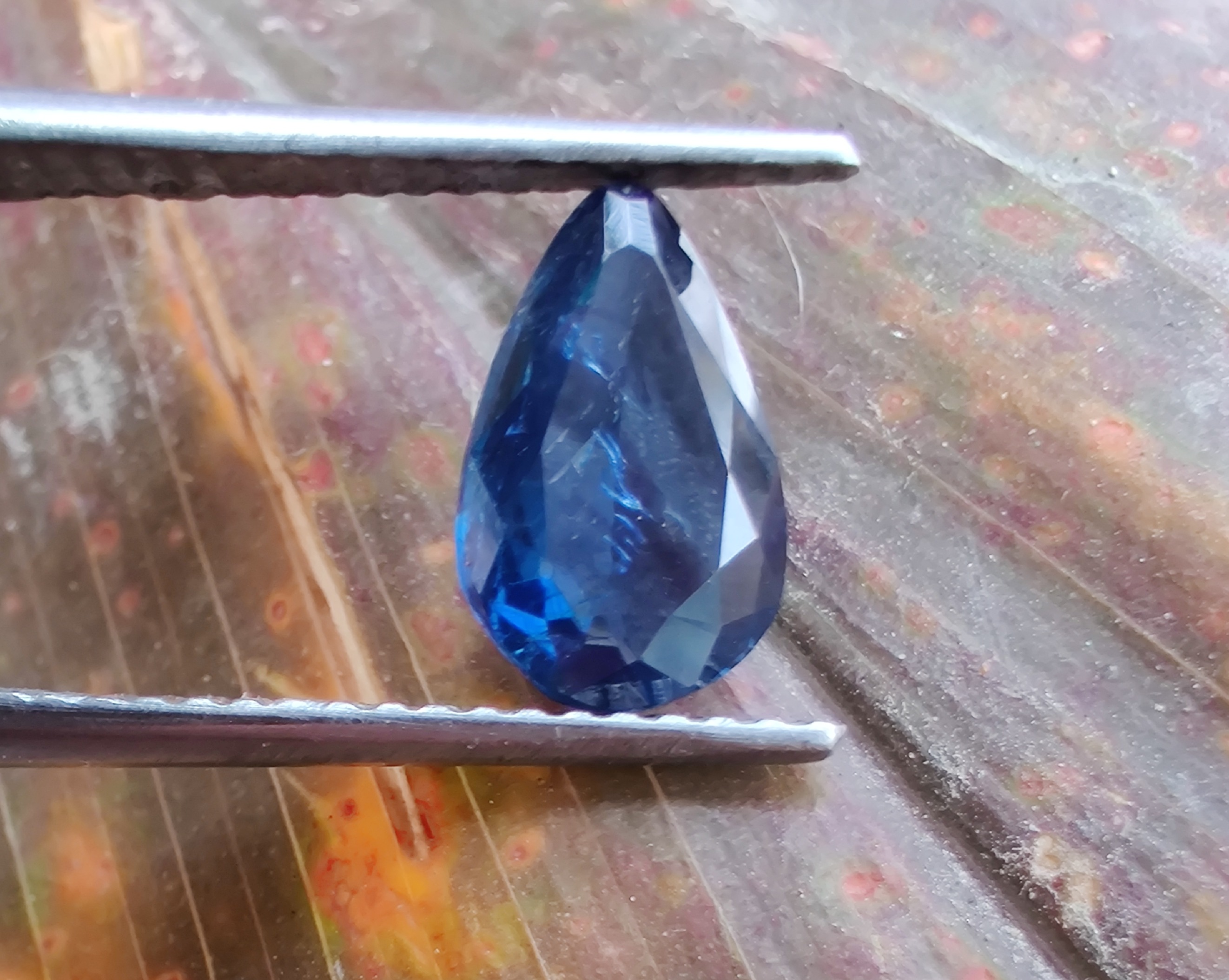
Among the rarest gemstones ever discovered, the Kashmir Sapphire stands in a category entirely its own. Revered by gem dealers, collectors, and royalty alike, this extraordinary stone carries a blue so pure, so velvety, and so luminous that no photograph can truly capture it. What many people do not know is that the most recent and exciting discovery of sapphires has been made in Pakistan — specifically in the Batakundi and Basil regions of the Neelum District in Azad Kashmir (Administered Kashmir) and the broader Gilgit-Baltistan area, whose geological formation is identical to the Kashmir region on the Indian side of the border. Because the geological DNA of the earth on both sides is the same, GIA-certified stones from this Pakistani deposit are officially certified as "Kashmir Pakistan Sapphire," carrying the same prestigious Kashmir designation. These extraordinary Pakistani Kashmir sapphires come in a remarkable range of colors — from the iconic velvety blue, to bi-color, vivid pink, and pinkish purple — making them among the most diverse and collectible Kashmir-origin stones available today. To hold a genuine Kashmir Sapphire, whether from the historic Indian mines or the newly discovered Pakistani deposits, is to understand why some gemstones are called miraculous — and why the finest examples command prices that rival the world's greatest diamonds.
THE ORIGIN — A REMOTE DISCOVERY IN THE HIMALAYAS
The story of the Kashmir Sapphire begins in the late 1870s, high in the Zanskar mountain range of the Kashmir region in northern India, at an altitude of roughly 15,000 feet. According to historical accounts, a landslide exposed a remarkable deposit of sapphires near the Kudi and Sumjam villages — stones so beautiful that local traders were soon carrying them down to the valleys below.
The deposit was mined intensively between 1882 and 1887 under the Maharaja of Kashmir, and again briefly in the early 20th century. What followed was near-silence. The main deposits became essentially exhausted, and no significant new source has been found since — until the recent Pakistani discovery changed everything. This tiny original window of production — just a handful of years over a century ago — is precisely why genuine Kashmir Sapphires are so extraordinarily rare today. Nearly every stone from the Indian side was mined over 130 years ago.
The specific conditions of the Kashmir geology — the particular mix of minerals, pressure, and heat deep within the Himalayan rock — produced a variety of corundum found nowhere else on earth. Geologists and gemologists have studied the region extensively, but the unique combination that creates the signature Kashmir color has never been replicated by nature in any other location — except, as we now know, across the border in Pakistan, where the same Himalayan geological belt continues uninterrupted.
Key Facts:
- Discovery: Late 1870s
- Peak mining (Indian side): 1882 – 1887
- Altitude: ~15,000 ft
- Pakistani discovery: Batakundi and Basil regions of the Neelum District in Azad Kashmir.
- Status: Extremely rare from both origins
WHAT MAKES THE COLOR SO EXCEPTIONAL
If you ask any gemologist what sets Kashmir Sapphires apart, the answer always begins with color. The stones display what the trade describes as a "cornflower blue" — a medium to medium-dark, vivid blue with a characteristic velvety or sleepy quality. This soft, almost hazy saturation is caused by microscopic inclusions of silk (tiny rutile needles) distributed evenly throughout the stone. Rather than dulling the gem, this silk scatters light internally, producing a luminosity that seems to glow from within.
Unlike Sri Lankan sapphires, which can appear slightly violet, or Thai sapphires, which often lean dark and inky, the Kashmir stone maintains its extraordinary blue in every lighting condition — daylight, incandescent, or artificial. Gemologists refer to this quality as "color stability," and Kashmir sapphires exhibit it more reliably than stones from any other origin. The color does not shift, does not grey out under low light, and does not become too saturated in direct sun.
The newly discovered Pakistani Kashmir sapphires expand this color story even further. Beyond the classic velvety blue, these stones present in bi-color formations (blue and white or blue and pink in a single crystal), vivid pinks of exceptional saturation, and pinkish-purple hues that rival the finest padparadscha sapphires. Each color variety carries its own GIA Kashmir Pakistan origin certificate, making them uniquely positioned in the collector market.
Kashmir Sapphires also tend to be exceptionally clean to the eye, with natural inclusions that a skilled gemologist can use as fingerprints of authenticity. In major auction houses and certified gem laboratories, origin determination — confirming that a sapphire truly comes from Kashmir — can more than double or triple a stone's value over an identical stone from another locale. The Gübelin Gem Lab and GIA both offer Kashmir origin certificates that are considered essential documentation for serious collectors.
LUE, RARITY, AND WHAT TO LOOK FOR WHEN BUYING
Kashmir Sapphires are among the most valuable colored gemstones in the world, routinely fetching prices of $50,000 to over $200,000 per carat for fine certified specimens at auction. A notable 27.68-carat Kashmir sapphire sold at Sotheby's for over $6.7 million — one of the highest prices ever achieved for a colored gemstone. These are not merely luxury items; they are investment-grade assets that have appreciated consistently over decades.
When considering a Kashmir Sapphire, buyers should look for a few key qualities: the signature velvety blue with medium to medium-dark tone, a lack of excessive darkness or violet secondary hues, and ideally a laboratory certificate confirming Kashmiri origin. For the newer Pakistani Kashmir stones, look for GIA certification specifically noting "Kashmir Pakistan" as the origin — this is your guarantee of authenticity and geological provenance. Size matters considerably — stones above 3 carats with strong origin certification are exceptionally rare, and prices increase dramatically with each additional carat.
Treatment history is equally important; unheated Kashmir sapphires command the highest premiums, as heat treatment, while common in sapphires from other regions, diminishes both the rarity and the prestige of a Kashmir stone.
For those who wish to own a piece of this remarkable history, Kashmir Sapphires — whether from the historic Indian deposits or the exciting new Pakistani discovery — represent the pinnacle of the sapphire world. A stone whose beauty is matched only by its scarcity, and whose provenance carries a story spanning continents, centuries, and the dramatic heights of the Himalayas. Whether as a centerpiece in a fine piece of jewelry or as a collector's gemstone, a Kashmir Sapphire is never simply a purchase. It is an heirloom.
---
View a Kashmir Sapphire at AA Gems and Jewelry:
https://www.aagemsandjewelry.com/products/sapphire-kashmir-blue-110.html
---
Article by AA Gems and Jewelry | aagemsandjewelry.com
Interested in our gemstones?
View Our Collection →